(415) 550-1077
 San Francisco


Prominent external ears (prominotia and lop ear) may be a source of embarrassment or teasing throughout childhood, and may severely impact a person’s confidence as an adult. In the case of prominent but normally-shaped ears, the bowl (concha cavum) of the ear is too large or projects too far away from the side of the head (mastoid bone). In other cases, the top of the external ear (pinna) is lacking one of the normal folds (lop ear). This gives the ears a fullness or a rabbit-like appearance and may cause them to look out of proportion with the rest of the face.
Luckily, each of these issues can be treated with a simple surgical procedure called otoplasty or ear pinning. Dr. Ransom reshapes or pins prominent ears using suture and cartilage-shaping techniques. All incisions are placed behind the ear, leaving no visible scars. Otoplasty is a minimally-invasive procedure and can be performed with local anesthesia or minimal sedation in an office-based facility or ambulatory surgery center. For children, the procedure may be performed in a hospital setting.
Explore our
Patient Gallery
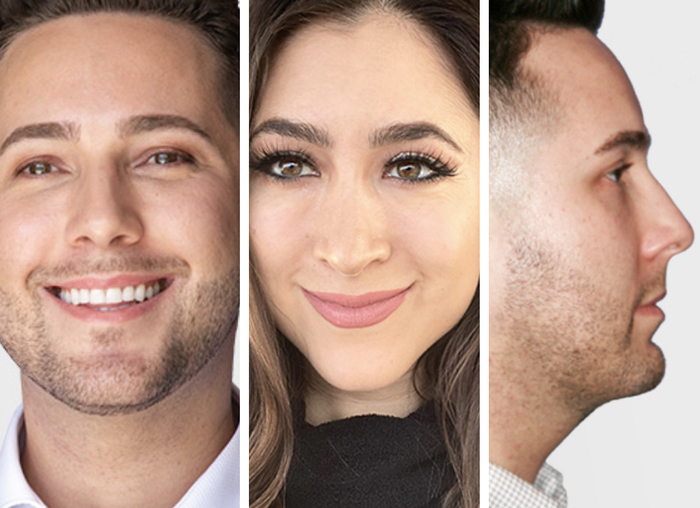
*Actual patients in photos
Who is a candidate?
People with prominent ears or ears that project too far from the sides of the head may be a candidate for otoplasty or ear pinning. In adults, surgical correction can be undertaken at any time. In children, the ears must be done growing before the procedure is performed. In most cases, the external ears reach adult size between 8 and 12 years of age. Dr. Ransom would be happy to discuss the anatomy of the external ear and procedures that are used to reshape this area during your consultation.
Earlobe Repair
The soft tissue of the earlobes is very important in the overall aesthetics of the face and neck, particularly in the profile. Unfortunately, this delicate tissue is easily stretched, torn, or macerated. In fact, something as simple as a heavy pair of earrings can significantly widen an ear piercing or even tear through the earlobe entirely! In other cases, a traumatic tear occurs, such as when an earring hoop or clasp is accidentally caught on a brush or a piece of clothing, or when a child unknowingly pulls on an earring. Luckily, each of these issues can be treated with a simple surgical procedure called earlobe repair.
Dr. Ransom specializes in the repair of severe earlobe tears and fully split earlobes. He will repair a completely torn earlobe using fine surgical instruments and hair-thin sutures to minimize scarring. Gauged earlobe repair often requires a combination of earlobe repair and reduction techniques to restore the size and shape of an overly stretched ear. Because of the size of large gauge holes, the skin cannot be simply stitched together. Instead, Dr. Ransom will carefully reconstruct the earlobe and remove some of the stretched skin and tissue to restore an aesthetic appearance. Earlobe repair can be performed with other aesthetic surgical or non-surgical treatments, such as rhytidectomy (facelift), scar revision, or Botox cosmetic.
Earlobe Reduction
Prominent, wide, or elongated earlobes may be unsightly or detract from the overall beauty and symmetry of the face. Some people are born with large, pendulous earlobes or an obvious asymmetry between sides. Most people, however, have well-proportioned and relatively symmetric earlobes in youth, but the earlobes become heavier, wider, or longer with age. This is particularly true in people who wear heavy or large earrings for many years. Dr. Ransom reduces or reshapes the soft tissue of the earlobe using precise measurements and fine surgical instruments, according to the specific details desired by the patient. Earlobe reduction is a minimally-invasive procedure and can be performed with local anesthesia or minimal sedation in an office-based facility or ambulatory surgery center.
Anyone who desires a change in the size or shape of the earlobes is a candidate for earlobe reduction or reshaping, and anyone with a damaged, stretched, or torn earlobe is a candidate for earlobe repair. The only absolute contraindication to the procedure is an ongoing or recent infection of the area, including an infected piercing. This would have to be completely resolved before the procedure in order to ensure appropriate healing. Patients with a history of hypertrophic scars require special consideration. Earlobe reduction can be performed with other aesthetic surgical or non-surgical treatments, such as rhytidectomy (facelift) or skin resurfacing. For more information about earlobe reduction, please contact Dr. Ransom or schedule your consultation today!
Dr. Ransom, a renowned San Francisco otoplasty surgeon, sees patients from all over Bay Area, including Mill Valley/Marin County, Napa/Sonoma, San Rafael/Petaluma, Hillsborough, San Mateo, Menlo Park, Orinda, Palo Alto, Piedmont, Walnut Creek, and the world.
Frequently Asked Questions
Please note that all patients are different and individual healing times and results may vary. The statements regarding procedures and recovery made here are general rules.
Does otoplasty affect hearing?
How do you sleep after ear surgery?
Can I drive after ear surgery?
Does otoplasty last forever?
How dangerous is ear surgery?
How ear surgery is done?
How is ear surgery done?
How long is ear surgery?
How long after otoplasty can I exercise?
How long does dizziness last after ear surgery?
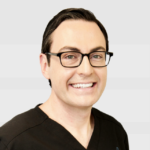
Dr. Evan Ransom is an Ivy League-educated and Ivy League trained Facial Plastic and Reconstructive Surgeon. He is a Double Board Certified Head and Neck Surgeon and Facial Plastic and Reconstructive Surgery and fellowship-trained in facial plastic, reconstructive, and laser surgery. His practice is in the San Francisco Bay Area, serving patients from San Francisco, Oakland, Marin County, Palo Alto, Silicon Valley, Walnut Creek, the East Bay, and all over Northern California.