(415) 550-1077
 San Francisco


Facial injectables and fillers provide non-surgical options for patients at Ransom/MD. Removing lines and wrinkles using non-surgical treatments is a specialty area, which is provided with care and compassion by Dr. Ransom and his team. In addition, injectable fillers are a non-surgical option for augmenting areas such as the lips or nose. In order to help you achieve your ideal appearance, it is important that those responsible for treatment understand your needs and goals as an individual.
Dr. Ransom offers neurotoxins such as Botox® Cosmetic, Dysport®, and Xeomin®; dermal fillers such as Juvéderm® and Restylane®; and Kybella™ for submental fat reduction. These treatments can be used on their own as non-surgical alternatives to procedures like cheek and chin augmentation, or alongside surgery to enhance and maintain your results.
Explore our
Patient Gallery
*Actual patients in photos
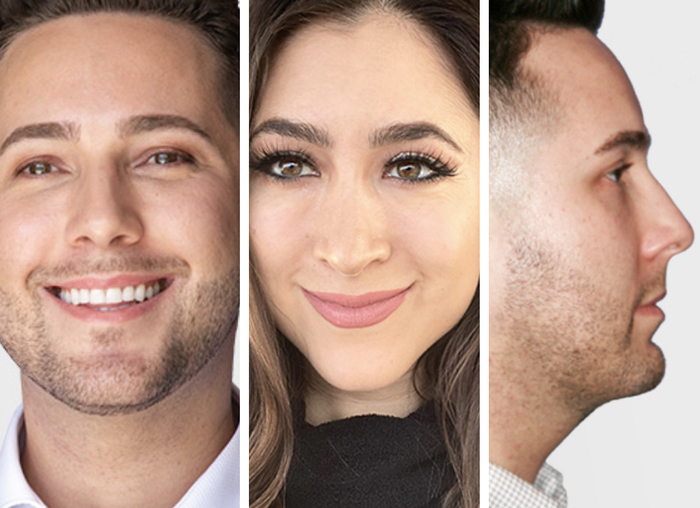
Botox, Dysport & Xeomin
Botox, Dysport, and Xeomin are comparable products created from botulinum toxin, which temporarily relaxes the muscles responsible for wrinkles and fine lines around the eyes and throughout the forehead. With skillfully placed, small doses, these molecules will interrupt the signals between nerve endings and muscle fibers in a particular area. The result is a softening of some of the facial wrinkles (rhytids) that are caused by repetitive motion.
The first approved and most common area for injections is the inter-brow area (glabella). Glabellar furrows or frown lines (sometimes called the “11’s”) are caused by the corrugator muscles, and weakening these muscles softens the brow region, opens up the eyes, and helps make people look more relaxed and rested. Dr. Ransom also uses these treatments for fine lines and furrows in the forehead and around the eyes (crow’s feet or smile lines), and they may be effective for certain types of neck bands (platysma muscles). For most patients, the effects last 3-4 months.
Dermal Fillers: Juvéderm, Restylane & More
Soft tissue fillers are used to add volume to the face, to treat deep folds and creases. The first approved and most commonly treated area is the nasolabial folds (the lines beside the mouth, sometimes called “parentheses”). Other areas frequently treated include the lines and folds below the corners of the mouth (“marionette lines”), the lower eyelid region (“tear troughs”), the lips, the cheeks, and the temples. Soft tissue fillers can also be used to camouflage depressed scars in some cases.
Dr. Ransom is skilled in the use of Juvéderm® (including Voluma®, Vollure XC, and Volbella®), Restylane® (including Lyft, Refyne, and Defyne), Belotero®, and Radiesse®, and recommends specific fillers for certain areas of the face due to the different thickness and durability of each filler formulation. Most of the commonly used soft tissue fillers today are made of hyaluronic acid (HA), which can be dissolved if needed. By employing a combination of fillers in an overall treatment program, sometimes called a “liquid lift” or “filler facelift,” Dr. Ransom can give you a quick, non-surgical rejuvenation without any downtime. Many patients will combine soft tissue filler treatments with Botox® Cosmetic or Dysport® for a simple, refreshing update to their look.
Non-Surgical Cheek Augmentation
As we age, the youthful roundness of our cheeks flattens, creating a transition from the heart-shaped face of youth to a more pyramid-shaped face of middle age. Cheek augmentation is often performed by placement of facial implants or fat grafting. Some patients, however, do not have the time or the desire to undergo a surgical procedure. For these patients, a great alternative is non-surgical cheek augmentation. Making the cheek fuller or giving it more shape and definition can be achieved with soft tissue fillers, such as Radiesse® or Voluma®, in a single session in the comfort of our office.
Radiesse® is made of biocompatible calcium hydroxyapatite and is placed deep along the bone of the upper cheek, where it lasts between 12 and 18 months for most patients. Voluma® is made from highly cross-linked hyaluronic acid and lasts up to 2 years. Patients who have a deep hollowness just below the eyes (the “tear trough” region) can also benefit from thinner HA fillers, such as Restylane® or Belotero®, which Dr. Ransom places with micro-cannulas to reduce bruising. If you like the results but don’t want to have repeated treatments, cheek implants are a more permanent option.
Non-Surgical Chin Augmentation
Many patients want a different shape or more projection of their chin, but don’t want to commit to a permanent change. For these patients, a great procedure is non-surgical chin augmentation. Making the chin bigger or giving it more shape and definition can be achieved with soft tissue fillers, such as Radiesse® or Voluma®. This procedure can also fill in the groove that forms between the chin and the lower cheek areas along the jawline as we age (the pre-jowl sulcus), and can be performed alone or in combination with other procedures such as rhinoplasty.
Radiesse® is placed deep along the bony prominence of the chin and lasts between 12 and 18 months for most patients, while Voluma® lasts up to 2 years. For patients who are just trying out facial enhancement, shorter-lasting HA fillers such as Juvéderm® are available. If you like the results but don’t want to have repeated treatments, a chin implant is a more permanent option.
Submental Fat Reduction (Kybella)
Kybella™ is an injectable treatment that reduces fat cells from below the chin, permanently reducing the appearance of a “double chin.” Kybella™ is a solution of deoxycholic acid, a medicine that promotes the absorption of fat cells and reduction of soft tissue volume when it is injected into the submental fat. The procedure is performed in the office with minimal discomfort and no downtime.
During the treatment, patients will receive a number of carefully planned injections of the medication directly into the fatty tissue. Then, over a period of a few weeks, a gradual reduction in the volume of the treated area will be seen. Some patients will have adequate reduction after one treatment, while most will need three or four sessions to achieve the desired aesthetic result.
Enhancing Your Surgical Results
Injectables are also a valuable complement to surgery. A facelift or neck lift repositions sagging tissues, but it does not restore volume that has been lost over time or treat the fine lines caused by facial movement. Fillers can restore fullness to areas like the cheeks, lips, and temples, while neurotoxins soften the forehead lines, frown lines, and crow’s feet that surgery alone does not address.
Dr. Ransom may recommend injectables before surgery to preview a change, such as adding volume to the chin before a rhinoplasty, or after a facelift, neck lift, or blepharoplasty to refine and maintain your results over time.
Who is a candidate?
Injectables are a great option for patients who want a noticeable improvement without surgery or downtime, or who want to enhance the results of a surgical procedure.
- Botox, Dysport & Xeomin: These treatments can be used safely in patients from 18 to 80+. Anyone who has had an adverse reaction to Botox should not receive injections, and there are also some rare neurological disorders that are a contraindication to treatment.
- Dermal Fillers: Anyone who is looking to add volume to the face or treat deep lines and folds is a candidate for soft tissue fillers. The only contraindications for filler injections are active infection in the area to be injected or a history of allergic reaction to the product.
- Kybella: Anyone with submental (under the chin and upper neck) fat deposits (“double chin”) may be a candidate for Kybella™ treatment. The ideal patient has well-defined fullness with good skin elasticity. Patients with significant excess skin may be better served with different techniques, such as liposuction or a face or neck lift.
The key to any facial enhancement is an open dialogue with the patient regarding aesthetic goals. Identifying the areas to be treated, and precise placement of the fillers, requires an artistic eye and a gentle touch. Our goal is to achieve the greatest aesthetic enhancement with a natural-looking result. Dr. Ransom will work closely with you throughout this process.
Dr. Ransom, a renowned San Francisco facial plastic surgeon, sees patients from all over Bay Area, including Mill Valley/Marin County, Napa/Sonoma, San Rafael/Petaluma, Hillsborough, San Mateo, Menlo Park, Orinda, Palo Alto, Piedmont, Walnut Creek, and the world.
Dr. Evan Ransom is an Ivy League-educated and Ivy League trained Facial Plastic and Reconstructive Surgeon. He is a Double Board Certified Head and Neck Surgeon and Facial Plastic and Reconstructive Surgery and fellowship-trained in facial plastic, reconstructive, and laser surgery. His practice is in the San Francisco Bay Area, serving patients from San Francisco, Oakland, Marin County, Palo Alto, Silicon Valley, Walnut Creek, the East Bay, and all over Northern California.