(415) 550-1077
 San Francisco


As the face ages, we see the effects of the constant force of gravity coupled with changes in the skin and adipose (fat) tissues. In some patients, the majority of the signs of aging occur at the jawline, under the chin (submental area), or in the neck region – leaving the face looking younger and more vibrant than the neck. These patients may seek rejuvenation of the neck region alone, rather than undergoing a full facelift and neck lift. Luckily, Dr. Ransom offers a variety of approaches – from minimally invasive, non-surgical treatments to the latest in surgical rejuvenation – that are targeted specifically at the aging neck. These procedures are great for men and women!
Explore our
Patient Gallery
*Actual patients in photos
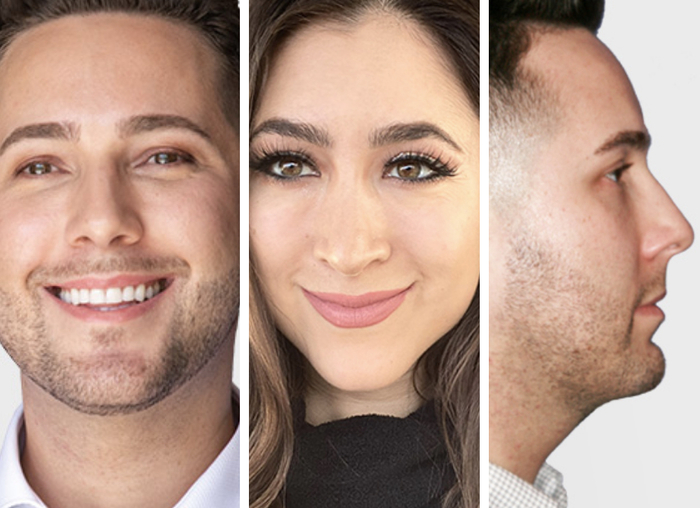
Planning for Your Procedure
Significant amounts of drooping neck tissue (“turkey neck”, “turkey gobbler”, or “waddles”), thick neck bands (platysmal banding), and the double chin (submental fat pockets) can all be treated by Dr. Ransom using a neck lift. The procedure has multiple elements, each based on the patient’s unique anatomy (degree of skin laxity, amount of fat, and position of the hyoid bone), overall skin condition, and other specific concerns.
First, gentle liposuction of the neck and under-chin (submental) area is performed. This is accomplished through tiny incisions (the size of a straw) hidden behind the earlobes and in a crease under the chin. Next, if distinct platysmal bands are visible, these are treated in one of two ways, depending on their thickness and contour. In most patients, it is possible to flatten these neck bands by releasing the muscle laterally from its tough attachment to the underlying neck muscles (sternocleidomastoid) and then redraping the platysma behind the ear. In a smaller number of patients, the bands are too heavy or too loose, and must be treated medially (under the chin); in these cases, after the platysma muscle is released, Dr. Ransom performs a corset platysmaplasty (which tightens the muscles up under the chin, like the ties on the back of a corset). Regardless of approach, the goal of these procedures is to reduce the prominence of thick or loose muscles in the neck and to provide a sharper or more acute angle between the chin and neck. The third and final component involves a small incision hidden behind the ear and in the hairline on the back of the head. This provides access for Dr. Ransom to remove redundant or loose skin.
Planning for Your Procedure
 Play Video
Who is a candidate?
Candidates for a neck lift include all patients with loose or sagging skin in the lower face and/or neck region, a poorly defined jawline or prominent jowls, or thick, hanging bands in the neck. The terms neck lift and facelift (or face-lift) can be used by doctors and in the media to imply a wide variety of procedures and approaches. Dr. Ransom tailors his surgical approach to each specific patient, working to achieve the desired goal, and avoiding an “operated” look. For patients with issues predominantly in the neck region, a neck lift is an excellent option. Dr. Ransom will review a variety of options during your consultation, helping you to choose the best possible plan for your unique anatomy and goals.
Neck Liposuction
For some people, being in great shape and eating right still can’t get rid of the extra fullness in the neck and chin (submental area). This “double chin” can be related to many issues, including the bone structure or alignment of the teeth, but is most often familial or genetic. This issue can appear throughout life, including in patients as young as their late 20’s. In younger patients or those with good elasticity and bone structure, neck liposculpting (cervicofacial liposuction) is an excellent choice. Neck liposculpting is a minor surgical procedure that can be performed with local anesthesia or minimal sedation, depending on patient preference. Tiny incisions (the size of a straw) hidden behind the earlobes and in a crease under the chin are made, and a small liposuction cannula is then used to remove excess fatty tissue from the anterior neck, without disrupting the delicate overlying neck skin.
Anyone with extra adipose tissue in the upper neck and the area under the chin can benefit from neck liposculpting. This procedure is most effective when the overall skin tone is good and there is minimal skin excess. When used as a primary treatment, neck liposculpting is generally performed on younger patients; for older patients, it is often used as an adjunct to other facial rejuvenation procedures, such as a facelift or midface lift. Neck liposuction (liposculpting) is a minimally invasive procedure with minimal downtime, and is often combined with placement of a chin implant to enhance the jawline and the neck contour. Patients are generally able to return to work in a few days. Non-surgical options are also available and may be more appropriate in some cases; these include Kybella injection.
Buccal Fat Removal
Many patients seek a change to the shape or volume of their cheek area, alone or in combination with other aesthetic enhancements. In some cases, there is extra fat in the cheeks despite a shapely face overall. These patients complain of “chubby cheeks” or a “baby face” and suffer from an unaesthetic width of the mid-cheek area relative to other features. This may be related to an over-developed or overly prominent buccal fat compartment (Bichat’s fat pad). In such patients, the fat of the cheek can be reduced by a procedure called buccal fat extraction (cheek reduction surgery).
Cheek reduction can be performed under local or with light sedation and may accompany other cosmetic procedures (such as rhinoplasty). In some cases, buccal fat removal can be performed with the placement of cheek implants to make a more significant change in the facial contour. All incisions are hidden in the mouth, so there are no external scars! With a subtle decrease in the width and fullness of the submalar region (the part of the cheek next to the mouth), significant improvements in the harmony between facial areas can be achieved. Anyone who desires a slimmer face, with decreased projection or fullness in the middle cheek area may be a candidate for buccal fat reduction. The only contraindications would be previous surgery in the cheek region or of the parotid gland.
Download our Neck Lift Guide
Click below to download all of the information provided on our website in a PDF.

Dr. Ransom, a renowned San Francisco neck lift surgeon, sees patients from all over Bay Area, including Mill Valley/Marin County, Napa/Sonoma, San Rafael/Petaluma, Hillsborough, San Mateo, Menlo Park, Orinda, Palo Alto, Piedmont, Walnut Creek, and the world.
Frequently Asked Questions
Please note that all patients are different and individual healing times and results may vary. The statements regarding procedures and recovery made here are general rules.
How much does neck contouring cost?
Is Neck lift surgery dangerous?
What is a non surgical neck lift?
What is the best treatment for saggy neck?
How do I prepare for a neck lift?
How do I tighten my jawline?
How much does Neck Lift Cost?
What is mini neck lift?
Whats involved in a neck lift?
How long does it take to recover from a neck lift?
How much does a facelift and neck lift cost?
What is a liquid facelift?
What is a lunchtime facelift?
What is a neck lift?
How long do neck lift results typically last?
Can a neck lift be performed with local anesthesia?
What is the ideal age for a neck lift?
How does weight fluctuation affect neck lift results?
Are there non-surgical alternatives to a neck lift?
Do I need a chin implant after a facelift or necklift?
Can you correct Ozempic face?
How do I use drain bulbs?
What is face & neck lift massage?
Dr. Evan Ransom is an Ivy League-educated and Ivy League trained Facial Plastic and Reconstructive Surgeon. He is a Double Board Certified Head and Neck Surgeon and Facial Plastic and Reconstructive Surgery and fellowship-trained in facial plastic, reconstructive, and laser surgery. His practice is in the San Francisco Bay Area, serving patients from San Francisco, Oakland, Marin County, Palo Alto, Silicon Valley, Walnut Creek, the East Bay, and all over Northern California.