(415) 550-1077
 San Francisco


Posted on August 3, 2026 in Facelift
Understanding the benefits of facelift surgery is an important first step for anyone considering facial rejuvenation in San Francisco, CA. A facelift, or rhytidectomy, may help address visible signs of aging in the mid-face, lower face, and jawline that non-surgical treatments cannot fully resolve. This page is designed for patients in research mode: those who want accurate, clinically grounded information before scheduling a consultation. Whether you are in the early stages of exploring your options or ready to take the next step, the information here can help you make a more confident, informed decision. To speak with a specialist directly, call for details.
Ready to learn more? Contact us to schedule a consultation at our San Francisco practice.
What a Facelift Can Address: Understanding the Benefits of Facelift Surgery
Lifting and Repositioning Descended Facial Tissues
One of the primary benefits of facelift surgery is the ability to reposition soft tissues that have descended over time due to gravity, volume loss, and the natural breakdown of collagen and elastin. This descent often produces jowls along the jawline, deepened nasolabial folds, and a general softening of the facial contours that once defined a more youthful appearance. A facelift may help restore definition to the jaw and lower face by lifting and securing the underlying SMAS layer, which is the structural foundation beneath the skin. This approach produces results that tend to look more natural than surface-only techniques, because the architecture of the face is being addressed rather than simply the skin itself. Individual results may vary based on anatomy, age, skin quality, and the specific technique your surgeon recommends.
Addressing the Neck and Jawline Together
Many patients who explore facelift surgery are equally concerned about the neck. Because the face and neck age as a connected unit, a comprehensive approach often produces the most harmonious outcome. A facelift is frequently performed alongside a neck lift in San Francisco to address banding, excess skin, and loss of definition beneath the chin. When these procedures are planned together, the result is a smoother, more cohesive contour from the cheek to the collarbone. In some cases, patients may also benefit from neck liposuction to refine the submental area. Your surgeon will assess your anatomy at consultation to determine which combination of procedures may help you meet your goals. A thorough evaluation is essential before any surgical plan is made.
Facelift Techniques: How the Right Approach Makes a Difference
Full Facelift Versus Mini Facelift
Not every patient requires the same depth of intervention. A full facelift surgery in San Francisco addresses the mid-face, lower face, and often the neck, making it appropriate for patients with more advanced signs of aging. A mini facelift may be a suitable option for patients who have early or moderate laxity and are looking for a more limited recovery timeline. The right technique depends on factors including your age, skin elasticity, the degree of tissue descent, and your personal goals. In our practice, we find that candidacy is highly individual, and a consultation is the only reliable way to determine which approach aligns with your anatomy and expectations.
Combining Facelift with Complementary Procedures
Facelift surgery addresses descent and laxity, but it does not change the shape of facial structures or reverse all surface-level changes. For that reason, many patients consider combining their facelift with procedures such as an upper eyelid lift, a brow and forehead lift, or non-surgical skin care treatments to optimize the overall result. Volume restoration with fillers or structural support with implants may also be discussed during your consultation. The goal of combining procedures is not to do more for its own sake, but to ensure that the results look balanced and natural across the whole face. Dr. Ransom’s recommendation will always be based on a clinical assessment of your specific needs.
Longevity, Recovery, and Setting Realistic Expectations
How Long Facelift Results May Last
One of the most commonly cited benefits of facelift surgery, compared to non-surgical alternatives, is the duration of results. While injectable treatments typically require maintenance every six to eighteen months, facelift results may last a decade or longer for many patients, depending on their genetics, lifestyle, and skin care habits. It is important to understand that a facelift does not stop the aging process; it repositions the face to a more youthful baseline. Some patients return years later for a secondary facelift or revision facelift as natural aging continues. Maintaining results over time may also involve a consistent medical-grade skin care regimen.
Understanding Recovery
Recovery from facelift surgery varies by individual and by the extent of the procedure performed. Most patients experience swelling and bruising in the first one to two weeks, with the majority of visible healing occurring within the first month. Many patients are comfortable returning to social activities within two to three weeks, though this timeline is not guaranteed and depends on individual healing patterns. Your surgeon will provide detailed pre-operative and post-operative instructions to support your recovery. Researching the full picture of what recovery may involve is part of making a well-informed decision.
Why Choose Dr. Evan Ransom in San Francisco, CA?
Dr. Evan Ransom is an Ivy League-educated and Ivy League-trained Facial Plastic and Reconstructive Surgeon serving patients throughout San Francisco, Marin County, Oakland, Palo Alto, Silicon Valley, Walnut Creek, and the broader Northern California region. He is Double Board Certified in Head and Neck Surgery and Facial Plastic and Reconstructive Surgery, and fellowship-trained in facial plastic, reconstructive, and laser surgery. His practice focuses exclusively on the face and neck, which means that patients benefit from a depth of specialization that is directly relevant to facelift surgery.
Dr. Ransom performs procedures at multiple hospitals and outpatient surgery centers in San Francisco and Marin County. Beyond his clinical practice, he dedicates time to humanitarian surgical work with Healing the Children, performing cleft lip and palate surgery in Ecuador, Colombia, Mexico, and Thailand. His combination of technical training, subspecialty focus, and commitment to patients reflects a standard of care that informed patients in the Bay Area consistently seek. To learn more about his background, visit his surgeon profile.
Frequently Asked Questions
Am I a good candidate for facelift surgery?
Candidacy for facelift surgery depends on several factors, including the degree of facial laxity, skin quality, overall health, and your personal goals. Most suitable candidates are in their forties through sixties, though patients outside this range may also qualify depending on their anatomy. A consultation with a board-certified facial plastic surgeon is the most reliable way to determine whether a facelift, a mini facelift, or a combination approach may be appropriate for you.
How is a facelift different from non-surgical facial rejuvenation?
Non-surgical options such as injectables and energy-based devices may help improve skin texture and temporarily restore volume, but they cannot reposition descended facial tissues or address significant skin laxity. A facelift works at a deeper structural level, repositioning the underlying SMAS layer and removing excess skin. For patients with moderate to advanced signs of aging, surgery may produce results that non-surgical approaches cannot replicate. Consulting with a specialist helps clarify which path aligns with your goals and anatomy.
What is the difference between a facelift and a neck lift?
A facelift primarily addresses the mid-face, lower face, and jowls, while a neck lift focuses on the skin and muscles of the neck, including the platysma bands and submental area. Because the face and neck age as a connected system, these procedures are frequently performed together for a more balanced and natural result. In some cases, neck liposuction may also be incorporated. Dr. Ransom will evaluate whether one or both procedures are appropriate based on your anatomy and goals.
Will a facelift look natural?
When performed by an experienced, fellowship-trained facial plastic surgeon, a facelift is designed to produce a refreshed, more youthful appearance rather than an altered or operated look. Modern facelift techniques work at the deeper structural layer of the face rather than simply pulling the skin, which tends to produce more natural and longer-lasting outcomes. Results vary by individual, and a thorough pre-operative discussion with Dr. Ransom about your goals and expectations is an important part of the process.
Does Dr. Ransom see patients from outside San Francisco?
Yes. Ransom/MD serves patients from throughout the San Francisco Bay Area, including Oakland, Marin County, Palo Alto, Silicon Valley, Walnut Creek, the East Bay, and across Northern California. Out-of-area consultations can be discussed directly with the practice. Patients traveling from a distance for facelift surgery are encouraged to plan for adequate recovery time in the area before returning home. Give us a call to discuss logistics and scheduling.
If you are researching the benefits of facelift surgery and are based in San Francisco, CA or the surrounding Bay Area, Dr. Evan Ransom’s practice offers the subspecialty expertise and individualized approach that this decision deserves. To schedule a consultation with a Double Board Certified Facial Plastic and Reconstructive Surgeon, reach out through our contact page.
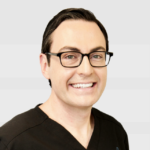
Dr. Evan Ransom is an Ivy League-educated and Ivy League trained Facial Plastic and Reconstructive Surgeon. He is a Double Board Certified Head and Neck Surgeon and Facial Plastic and Reconstructive Surgery and fellowship-trained in facial plastic, reconstructive, and laser surgery. His practice is in the San Francisco Bay Area, serving patients from San Francisco, Oakland, Marin County, Palo Alto, Silicon Valley, Walnut Creek, the East Bay, and all over Northern California.