(415) 550-1077
 San Francisco


Are you considering a facelift surgery and looking for a trusted facelift surgeon in the Bay Area? Dr. Evan Ransom, a renowned San Francisco facelift surgeon, has expertise with a full spectrum of solutions to make you look younger. As the face ages, we begin to see the effects of a constant force of gravity coupled with changes in the skin and connective tissue, as well as a loss or redistribution of fat (adipose tissue). These factors lead to the well-known phenomena of jowls, deep nasolabial folds, down-turned corners of the mouth (“marionette lines”), drooping neck tissues (“turkey neck”, “turkey gobbler”, or “waddle”), and tired, hollow, or sunken-appearing eyes. The most distressing part of these changes is that frequently patients do not feel as old as they look – they have energy and passion, but people still overlook them or ask them if they’re tired or not feeling well. The unfortunate truth is that we live in an “age-ist” society, and as people grow older, they are frequently overlooked or even discriminated against. Dr. Ransom, San Francisco facelift surgeon, can address all of these concerns with a variety of techniques, from non-surgical treatments, to minimally-invasive procedures, to complete surgical rejuvenation. This skilled facelift plastic surgeon sees patients in his offices in the Bay Area.
A facelift surgery uses a similar approach to the Mini-Facelift, but with more extensive dissection and greater lift. Facelift Surgery is designed for patients who have more obvious and heavy jowls, drooping of the cheek area, hanging neck tissue or platysmal bands, and significant redundancy or excess skin. Dr. Ransom, skilled San Francisco facelift surgeon, uses the latest in facelifting techniques to elevate the neck, jowls, and cheeks (midface) in one surgical procedure. With this procedure, Facelift Surgeon Dr. Ransom doesn’t just lift the skin (which leads to incomplete correction, unnatural “wind-swept” looks, and short-lived results) – he lifts the deep tissues and muscles of the face and neck. The result is a better, longer-lasting, and more natural-appearing facelift …and a more youthful, vibrant, and healthy-looking you.
Explore our
Patient Gallery
*Actual patients in photos
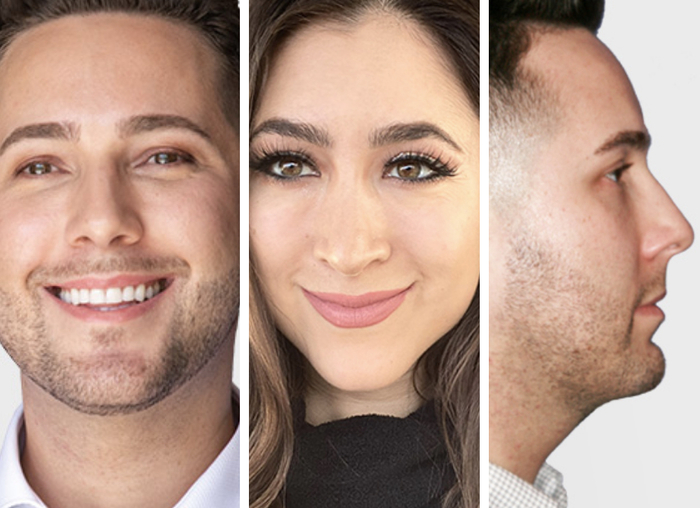
A Mini-Facelift is a short-incision type facelift surgery (“S-lift”) with a more limited dissection. This type of facelift surgery is designed for younger patients or those with less significant jowls and drooping of the neck. Mini-Facelift surgery tightens the loose skin along the jawline and under the chin, and may also remove some excess fat from these areas. Dissection is limited, so recovery is quick – getting you back on the move with minimal downtime! For some patients, rejuvenation of the neck is all that is needed. In these cases, San Francisco Facelift Surgeon Dr. Ransom can perform a lift that is specifically tailored to the neck, without disturbing the facial structures. Please see our Neck Lift page for more detailed information.
Facelift Procedures
 Play Video
Rhytidectomy (literally “to remove wrinkles”), also known as “facelift” or “face-lift”, is a surgical procedure designed to release and reposition the soft tissues of the face and neck, and to remove excess skin and fat. The combined effect of facelift surgery is a natural-appearing natural-appearing rejuvenation – restoring the patient’s face to a more youthful state. Dr. Ransom, experienced San Francisco facelift surgeon, tailors his facelift approach to the specific anatomy of each patient, and works closely with each individual to satisfy specific goals – all the while making sure that, in the end, “you still look like you” …just a younger, more vibrant “you”! Depending on the patient’s age, degree of laxity, and other biological factors, patients may undergo a Mini-Facelift, a Neck Lift, or a full Facelift surgery. San Francisco Facelift Surgeon Dr. Ransom will evaluate your face and discuss the best option for you during your facelift consultation at his office in the Bay Area.
Who Is A Candidate?
Candidates for facelift surgery include all patients with loose or sagging skin in the lower face and/or neck region, a drooping or hollow-appearing midface, a poorly defined jawline or prominent jowls, or thick, hanging bands in the neck. The term facelift (or face-lift) can be used by facelift surgeons and in the media to imply a wide variety of procedures and approaches. San Francisco Facelift Surgeon Dr. Ransom tailors his surgical approach to each specific patient, working to achieve the desired goal and avoiding an “operated” look. In most cases, this skilled facelift surgeon performs a deep-plane facelift, which lifts the deep tissues and muscle layers of the face and neck, rather than the skin alone. This makes Dr. Ransom’s patients look natural and avoids the “wind-swept” or “pulled” look.
Download Our Facelift Guide
Click below to download all of the information provided on our website in a PDF.

Dr. Ransom, a renowned San Francisco facelift surgeon, sees patients from all over Bay Area, including Mill Valley/Marin County, Napa/Sonoma, San Rafael/Petaluma, Hillsborough, San Mateo, Menlo Park, Orinda, Palo Alto, Piedmont, Walnut Creek, and the world.
Frequently Asked Questions
Please note that all patients are different and individual healing times and results may vary. The statements regarding procedures and recovery made here are general rules.
How do I get rid of my double chins?
How do I prepare for a facelift?
How do you take care of your face after a facelift?
How long after a facelift can I exercise?
How long does facelift last?
How long does fat transfer face last?
How do you reduce swelling after a facelift?
How do I reduce swelling in my face?
How do I tighten my jawline?
How long does it take for bruising on the face to go away?
How long is recovery from a facelift?
Does a facelift make you look younger?
How can I tighten loose skin on my face?
How long do ears hurt after facelift?
What is a facelift called?
Can a facelift correct sagging in the neck area?
Is a facelift effective for both men and women?
How long should I wait after a facelift before returning to exercise?
Can a facelift improve deep wrinkles?
Are facelift results permanent?
Are there non-surgical options for face and neck tightening?
How is an SMAS facelift different from a deep plane facelift?
How long will I be swollen after a facelift?
How do I use a jade roller?
Do I need a chin implant after a facelift or necklift?
Can you correct Ozempic face?
How do I use drain bulbs?
What is face & neck lift massage?
How can lasers & microneedling improve surgical results?
Dr. Evan Ransom is an Ivy League-educated and Ivy League trained Facial Plastic and Reconstructive Surgeon. He is a Double Board Certified Head and Neck Surgeon and Facial Plastic and Reconstructive Surgery and fellowship-trained in facial plastic, reconstructive, and laser surgery. His practice is in the San Francisco Bay Area, serving patients from San Francisco, Oakland, Marin County, Palo Alto, Silicon Valley, Walnut Creek, the East Bay, and all over Northern California.