(415) 550-1077
 San Francisco


Posted on May 28, 2026 in Facelift
Facelift vs Mini Facelift: Which Procedure Is Right for You?
When considering facelift vs mini facelift options in San Francisco, understanding the differences between these two procedures is one of the most important steps you can take before scheduling a consultation. Both approaches address facial aging, but they differ meaningfully in scope, recovery, and ideal candidacy. Choosing the right procedure depends on your anatomy, your goals, and the degree of change you are hoping to achieve. A consultation with a double board-certified facial plastic surgeon can help clarify which path aligns best with your individual needs and expectations. Schedule a consultation with Dr. Ransom to discuss your candidacy for facelift or mini facelift surgery in the San Francisco Bay Area.
What Is a Facelift?
A facelift, also known as a rhytidectomy, is a comprehensive surgical procedure designed to address moderate to advanced signs of facial aging. During a facelift, the surgeon repositions the deeper facial tissues and muscles, known as the SMAS layer, and removes or redistributes excess skin to restore a more youthful contour to the face and jawline.
What a Facelift May Address
-
Deep nasolabial folds and jowls
-
Significant laxity of the mid-face and lower face
-
Loss of definition along the jawline
-
Excess skin in the lower face and upper neck
A facelift is frequently performed alongside complementary procedures such as a neck lift or brow lift to achieve more comprehensive facial rejuvenation. Recovery following a facelift is typically longer than that of a mini facelift, and results may last a decade or more, though individual results may vary. Patients who have previously undergone a facelift may also be candidates for a secondary facelift to address changes that develop over time.
What Is a Mini Facelift?
A mini facelift is a less extensive surgical procedure that targets early to moderate signs of facial aging, particularly in the lower face and along the jawline. Sometimes called a “short scar” facelift, this approach uses smaller incisions and focuses on lifting and tightening the tissues of the lower cheeks and jowl area without addressing the deeper tissue planes as extensively as a traditional facelift.
What a Mini Facelift May Address
-
Early jowling and mild to moderate skin laxity
-
Loss of definition in the lower face and jawline
-
Mild sagging of the mid-face tissues
Because the incisions are shorter and the dissection less extensive, most patients experience a shorter recovery period compared to a full facelift. Results from a mini facelift are typically more subtle and may not address advanced aging changes as effectively. Individual results may vary, and not every patient is a suitable candidate for this approach. A thorough evaluation by a fellowship-trained facial plastic surgeon like Dr. Ransom is essential to determine whether a mini facelift can meet your cosmetic goals.
Key Differences Between a Facelift and a Mini Facelift
Category Facelift Mini Facelift How It Works Repositions SMAS layer; removes/redistributes excess skin Limited tissue lifting; shorter incisions; surface-focused Treatment Areas Mid-face, lower face, jawline, and upper neck Lower face and jawline primarily Results Timeline Noticeable improvement visible after swelling subsides, typically 4 to 6 weeks Results visible sooner, often within 2 to 3 weeks Longevity of Results May last 10 or more years; individual results may vary Typically 3 to 6 years; individual results may vary Recovery Longer recovery, generally 2 to 3 weeks before return to routine Shorter recovery, often 1 to 2 weeks for most patients Ideal Candidate Moderate to advanced facial aging with significant laxity Early to moderate aging with mild to moderate laxity
The comparison table above captures core structural differences, but it cannot fully account for the nuances of each patient’s anatomy and goals. For example, a patient comparing facelift vs mini facelift may have a degree of neck laxity that makes a standalone mini facelift insufficient, even if their facial aging appears mild. Conversely, a patient seeking subtle improvement with minimal time away from work may find a mini facelift better suited to their lifestyle. These are precisely the distinctions that a personalized surgical consultation is designed to clarify. Contact Dr. Ransom’s office to discuss your facelift vs mini facelift candidacy in San Francisco.
Which Procedure Is Right for You?
Selecting between a facelift and a mini facelift is not a simple calculation. The right answer depends on your current anatomy, your long-term aesthetic goals, and your tolerance for recovery time.
Patients who may be well-suited to a full facelift include those who have developed significant jowling, deep facial folds, substantial skin laxity across the mid-face and lower face, or noticeable changes along the neck and jawline. Those who have already had a facelift and are noticing recurrent changes may also be candidates for revision surgery.
Patients who may be better suited to a mini facelift typically present with early to moderate aging, retain reasonable skin elasticity, and are primarily concerned with the lower face and jaw. This procedure may also appeal to those who prefer a shorter recovery window due to professional or personal commitments.
Dr. Ransom is a double board-certified head and neck surgeon and facial plastic and reconstructive surgeon. He is fellowship-trained in facial plastic, reconstructive, and laser surgery, and brings Ivy League education and training to every consultation. His approach begins with a thorough evaluation of your facial anatomy to determine which procedure, or combination of procedures, may best support your goals. Individual results may vary, and the right recommendation can only be made after a direct, personalized assessment.
Why Choose Dr. Ransom for Facelift Surgery in San Francisco?
Dr. Evan Ransom is an Ivy League-educated and Ivy League-trained facial plastic and reconstructive surgeon serving patients throughout San Francisco, Marin County, Oakland, Palo Alto, Silicon Valley, Walnut Creek, and the broader Northern California region. His double board certification in both head and neck surgery and facial plastic and reconstructive surgery reflects a depth of specialty focus that is directly relevant to facelift and mini facelift procedures. Dr. Ransom performs surgery at multiple hospitals and outpatient specialty surgery centers in San Francisco and Marin County, offering patients access to high-quality surgical facilities. Beyond his clinical practice, he contributes to international humanitarian surgery through his mission work with Healing the Children, performing cleft lip and palate surgery in Ecuador, Colombia, Mexico, and Peru. His commitment to surgical excellence extends well beyond the Bay Area.
Frequently Asked Questions: Facelift vs Mini Facelift
How does the cost of a facelift compare to a mini facelift in San Francisco?
A full facelift is generally more costly than a mini facelift, reflecting the greater surgical complexity, longer operative time, and more comprehensive tissue work involved. However, because the right procedure depends on your anatomy and goals, cost should be considered alongside the scope of correction you actually need. A consultation with Dr. Ransom, a board-certified facial plastic surgeon, will give you an accurate estimate based on your individual treatment plan. Individual pricing varies based on factors including facility fees and anesthesia.
Can a facelift and mini facelift be combined with other procedures?
Yes. Both procedures are frequently performed in combination with complementary treatments. A facelift is commonly paired with a neck lift, eyelid surgery, or brow lift to address aging across multiple facial zones simultaneously. A mini facelift may be combined with less extensive procedures. Dr. Ransom evaluates each patient’s full facial picture and may recommend complementary procedures to help achieve more balanced, cohesive results.
How does recovery from a facelift compare to recovery from a mini facelift?
Recovery from a full facelift is typically longer, with most patients needing approximately two to three weeks before returning to regular activities, though complete healing continues for several months. A mini facelift generally involves a shorter recovery, often allowing a return to light activity within one to two weeks for most patients. Both procedures involve swelling and bruising during the initial healing period. Specific recovery timelines vary by individual, and Dr. Ransom provides detailed post-operative guidance for every patient.
How should I choose a provider for facelift or mini facelift surgery?
When evaluating providers for facelift vs mini facelift surgery, prioritize surgeons who hold board certification specifically in facial plastic surgery or plastic surgery, with dedicated subspecialty training in facial procedures. Fellowship training in facial plastic and reconstructive surgery is an important indicator of specialized expertise. Reviewing before-and-after examples, understanding the surgical approach each provider uses, and confirming that your surgeon performs these procedures regularly are all important steps before making a decision. A thorough, unhurried consultation is essential.
Is a mini facelift a good option for younger patients?
A mini facelift may be appropriate for patients in their 40s or early 50s who are beginning to notice jowling or mild lower facial laxity but do not yet have the degree of aging that would benefit from a full facelift. That said, age alone is not the determining factor. Skin quality, tissue laxity, and the specific concerns a patient wants to address all inform candidacy. A personalized evaluation is the only reliable way to determine whether a mini facelift aligns with your goals.
Take the Next Step Toward Facial Rejuvenation in San Francisco
If you are weighing facelift vs mini facelift options in the San Francisco Bay Area, the most important step is a consultation with a specialist who can evaluate your individual anatomy and goals. Dr. Ransom’s double board-certified expertise in facial plastic and reconstructive surgery provides patients with the depth of knowledge needed to make a confident, well-informed decision. To schedule your consultation, call our office or contact us online today.
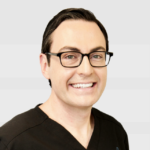
Dr. Evan Ransom is an Ivy League-educated and Ivy League trained Facial Plastic and Reconstructive Surgeon. He is a Double Board Certified Head and Neck Surgeon and Facial Plastic and Reconstructive Surgery and fellowship-trained in facial plastic, reconstructive, and laser surgery. His practice is in the San Francisco Bay Area, serving patients from San Francisco, Oakland, Marin County, Palo Alto, Silicon Valley, Walnut Creek, the East Bay, and all over Northern California.